What You Need to Know About Winter Paddling
I’ve been paddling around Northern New England for more than 15 years, and my adventures have introduced me to some pretty remarkable places and experiences.
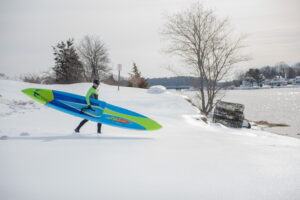
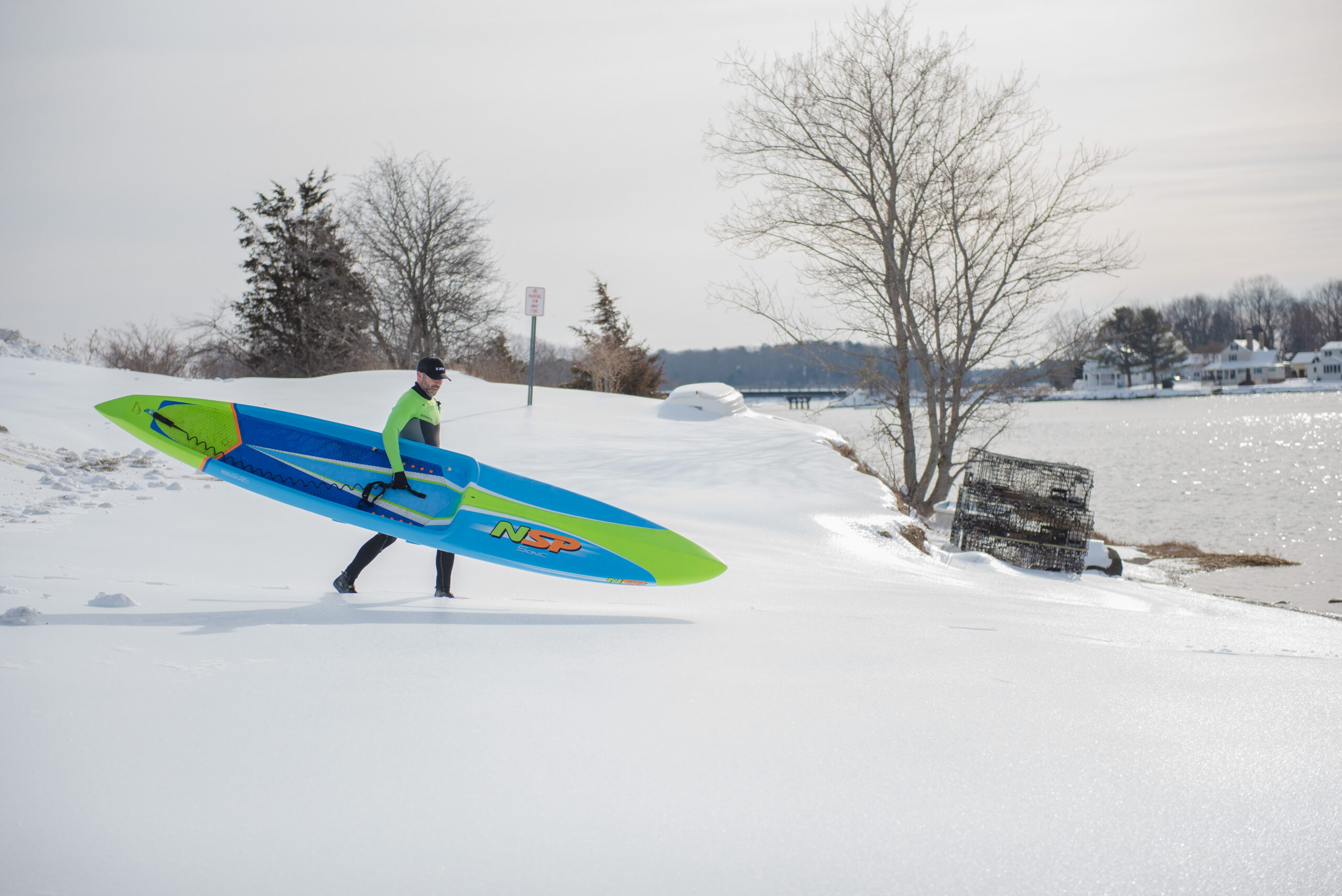
Over the years, I’ve explored quiet stretches along Plum Island’s Joppa Flats, paddled the rocky coast of Maine, and ventured inland to catch the Fall foliage on Alton Bay. I’ve glided through sea smoke on sub-freezing mornings, chased the Hunter’s Moon in Sagamore Creek, and launched from snow-swept, empty beaches where the only footprints left were my own.
Through all of these adventures, I’ve learned that there really isn’t an off-season when it comes to paddling in Northern New England. Each change of season just requires us to think and prepare for our time on the water a little differently.
By extending the paddle season into the Fall and Winter, you don’t just get to spend more days on the water, you get to experience the world through a different lens.
So, if you’ve been thinking about getting more serious about your paddling heading into the colder months, I’ve put together the following article just for you.
We’ll start with developing a cold-water mindset, then look at how your body responds to cold water, choosing the right gear, and preparing for the unexpected. The goal is simple: to help you understand what you’re getting into and be better prepared for your time on the water.
Developing a Cold Water Mindset
Cold-water paddling starts with understanding and respecting the conditions you’re choosing to paddle in, and what can happen if things don’t go as planned.
When the water gets cold, you don’t get much room for error. A mistake that might be nothing more than an inconvenience in July can become a much bigger problem in January.
That doesn’t mean you should be afraid of the water. It means you should pay attention to it.
Before I launch in colder conditions, I think about a few simple things. Where am I planning to paddle? Have I checked the latest weather forecast? How long do I plan to be on the water? Am I paddling with someone else, or does someone know where I’m going and when I expect to be back? And, most importantly, am I prepared if something doesn’t go according to plan?
That’s really the mindset. Use common sense, think ahead, and do what you can to mitigate the risks.
You can’t eliminate every risk when you’re on the water, but you can make smart decisions before you launch that can greatly reduce the chances of something going wrong, and make you better prepared if it does.
Cold-water paddling can be incredibly rewarding. The key is making sure you’re prepared for the conditions you’re choosing to paddle in.
Understand the 120° Rule
If you’ve spent any time around cold-water paddlers, you may have heard people talk about the 120° Rule.
The 120° Rule has been used for years as a simple way to recognize when cold-water conditions deserve extra attention. It’s easy to remember and gives you a quick way to think about the relationship between air temperature and water temperature.
To calculate, all you need to do is add the air temperature and the water temperature together. If the total is below 120°F, it’s a warning that you should take cold-water exposure seriously and consider additional protection.
For example, if it’s 60°F outside and the water is 50°F, the combined temperature is 110°F. That’s well below 120°, which is a good reminder that an unexpected swim could lead to a serious situation.
But here’s the important part:
The 120° Rule isn’t a guarantee of safety. It’s a rule of thumb—not a scientific formula. It’s an early indicator that tells you whether it’s safe to paddle without cold-water protection.
Water temperature, how you’re dressed, wind, conditions, your experience, and how long and how far you’re planning to paddle all matter. Think of the 120° Rule as a warning flag, not a green light.
If the water is cold enough that an unexpected fall could put you in trouble, you should be prepared for immersion regardless of what the calculation says.
Because ultimately, the question isn’t:
“Does the temperature add up to 120°?”
It’s:
“What happens if I fall in?”
That’s the question that should guide what you wear and how you prepare.
So, What Happens When You Fall In?
When people think about the dangers of cold-water paddling, hypothermia is usually the first thing that comes to mind. And for good reason. Hypothermia is serious, but if you fall into cold water, it’s not the first thing you need to worry about.
Cold shock is.
Those first few seconds in cold water can literally shock your nervous system. You may gasp, your breathing can become rapid and difficult to control, and your body can react before you’ve had a chance to process what’s happening.
Then the cold starts to affect your ability to function. Your muscles become less effective, your hands can get cold and numb, and your coordination can start to go. Something as simple as grabbing your board, managing your leash, or getting yourself back on the board can suddenly become much more difficult.
That’s why getting out of the water quickly matters. Cold shock happens almost immediately, while hypothermia develops as your body continues to lose heat. The longer you’re exposed to cold water, the greater the risk.
Understanding the difference between the two is important when you’re thinking about cold-water paddling.
Cold Shock vs. Hypothermia
It’s important to understand that cold shock and hypothermia are two very different things.
| Cold Shock | Hypothermia |
|---|---|
| Happens immediately after entering cold water | Develops over time as your body continues to lose heat |
| Can cause gasping and rapid, difficult-to-control breathing | Can cause shivering, confusion, weakness and loss of coordination |
| Can affect your ability to stay calm and function | Can progressively affect your ability to think and care for yourself |
| The initial response to cold water immersion | The result of prolonged heat loss |
The important thing to remember is that cold shock happens quickly, while hypothermia takes time to develop. If you find yourself in cold water, the priority is to get out of the water and stop the exposure as quickly as possible.
Hypothermia: Know the Signs
Once you’re out of the water, it’s important to pay attention to how you and your paddling partner are doing. Hypothermia doesn’t always announce itself in an obvious way, and the person experiencing it may not recognize how much their condition is changing.
That’s one of the reasons I believe so strongly in paddling with someone else. Your paddling partner may notice changes in your behavior, coordination, or speech before you recognize them yourself.
Some of the signs to watch for include:
Persistent or uncontrollable shivering
Numbness
Weakness or unusual fatigue
Clumsiness or loss of coordination
Confusion or difficulty thinking clearly
Slurred speech
Drowsiness or unusual behavior
Disorientation
Loss of consciousness in severe cases
If you notice these signs in yourself or someone you’re paddling with, don’t ignore them. Get out of the cold, get warm, and take the situation seriously.
Cold Water Gear: What Do I Wear?
One of the biggest questions I get asked when we start talking about winter paddling is pretty simple:
“What should I wear?”
I’ve been surfing since 1986, and I grew up surfing through the winter. After spending that much time in cold water, I’ve become pretty partial to a wetsuit.
For flat-water paddling, I typically wear either a 3/2 mm or 4/3 mm wetsuit, depending on the month and the conditions. When I’m SUP surfing, I step up to a 5/4 mm hooded wetsuit, because I know I’m going to spend a lot more time in the water.
That’s what works for me, but it may not be what works for you.
There are a lot of things to consider when deciding what to wear. Water temperature is probably the biggest factor, but air temperature, wind, how long you plan to be out, the type of paddling you’re doing, and your experience level all come into play.
If you’re a newer paddler who is still working on your balance and may find yourself in the water a few times during a paddle, you’re going to want to think differently about what you’re wearing than someone who rarely falls.
There are also paddlers who prefer drysuits, and they can be a great option for cold-water paddling. Personally, I prefer a wetsuit, but I’m not going to tell you that one is better than the other.
So let’s take a look at both options, and the pros and cons of each.
| Consideration | Wetsuit | Drysuit |
|---|---|---|
| How it works | Uses neoprene insulation to keep you warm, even when wet. | Creates a waterproof barrier and relies on layers underneath for insulation. |
| Warmth | Warmth comes primarily from the thickness and fit of the neoprene. | Warmth can be adjusted by changing the layers worn underneath. |
| If you fall in | Provides insulation while you’re in the water. | Helps keep water out when properly fitted and used. |
| Mobility | Flexible and generally allows a natural paddling motion. | Can feel different to paddle in and may take some getting used to. |
| Fit | Needs to be snug to work effectively. | Needs to fit properly, with working seals at the neck and wrists. |
| Simplicity | Relatively simple, put it on and go. | Requires more thought about layering and what you wear underneath. |
| Cost | Generally less expensive. | Generally more expensive. |
| Best suited for | Paddlers who prefer the simplicity and flexibility of neoprene and are comfortable getting wet. | Paddlers looking for a waterproof system with adjustable insulation. |
| My take | My personal preference after decades of surfing and cold-water experience. | A very good option, but not my personal preference. |
Gear Buying Tip:
The choice between a wetsuit and a drysuit is a personal one. What matters most is finding the system that keeps you warm, comfortable, and confident enough to keep paddling as the temperatures drop.
Be Prepared & Enjoy the Paddle!
One of the things I’ve learned after years on the water is that the plan you leave the beach with isn’t always the plan you finish with.
Maybe the wind picks up. The temperature drops faster than expected. You take a swim you weren’t planning on taking. Or you simply realize halfway through a paddle that you’re not as comfortable as you thought you would be.
That’s where preparation really matters.
You don’t need to have an answer for every possible scenario. But you should think about what you would do if things don’t go according to plan. Where could you get off the water? Who could you call? What happens if you end up wet, cold, or farther from your launch point than expected?
And don’t forget about what happens after the paddle.
I always keep warm, dry clothes, a blanket, and something to drink in my car. It’s a simple thing, but after a cold-water paddle, having everything you need waiting for you can make a big difference. And if the paddle doesn’t go exactly as planned, you’ll be glad you thought ahead.
The colder months can offer some of the best paddling of the year. Just respect the conditions, prepare for the unexpected, and know when it’s time to call it a day.
Until next time, I look forward to seeing you on the water!
–CC